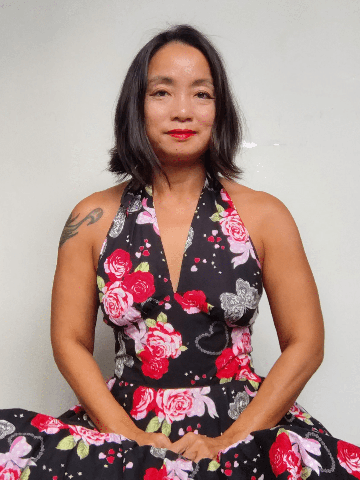
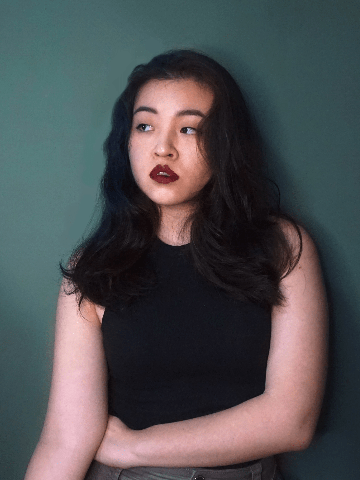
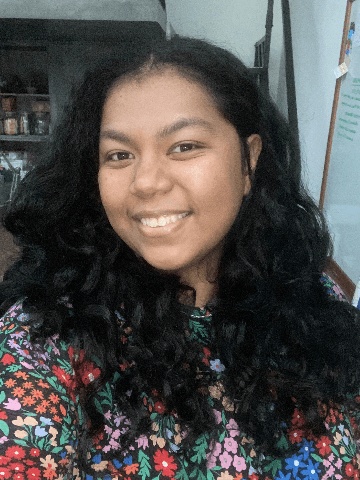
From witch hunts to femme fatales, writers Marjorie Liu, Wen-yi Lee and Meihan Boey share their favourite stories and examine how horror and speculative fiction can celebrate, vilify and subvert the best and worst of the female experience.
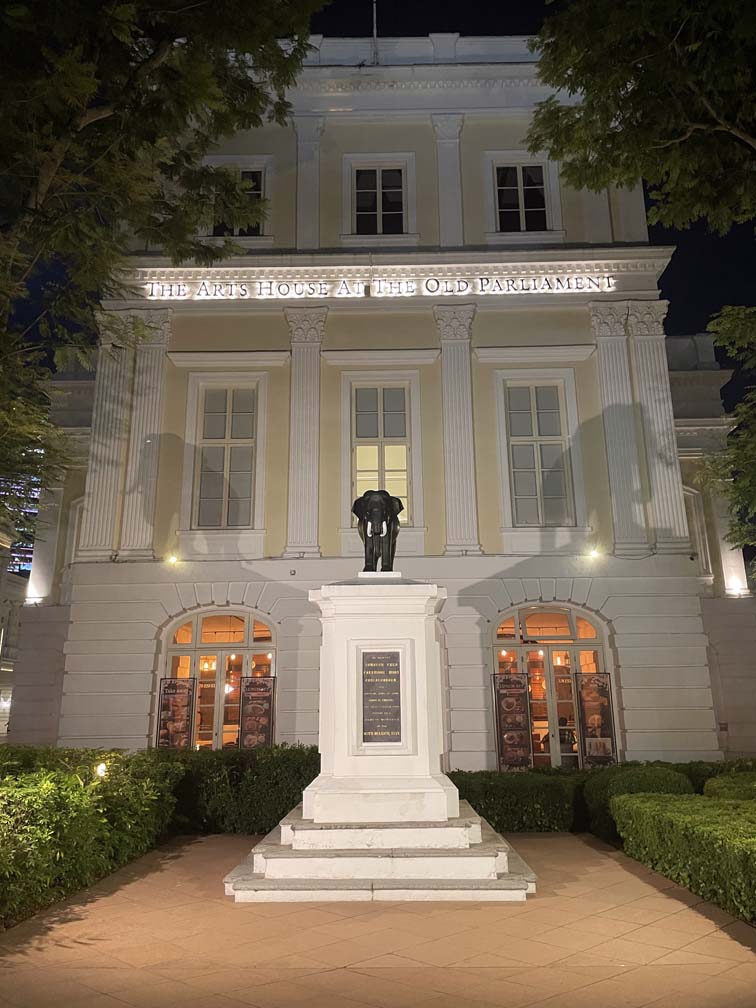
I made my way to The Arts House near Raffles Place, a beautiful building constructed in 1827 that served as Singapore’s first parliament. Reopened in 2004, the building now serves as an elegant arts centre and festival venue.
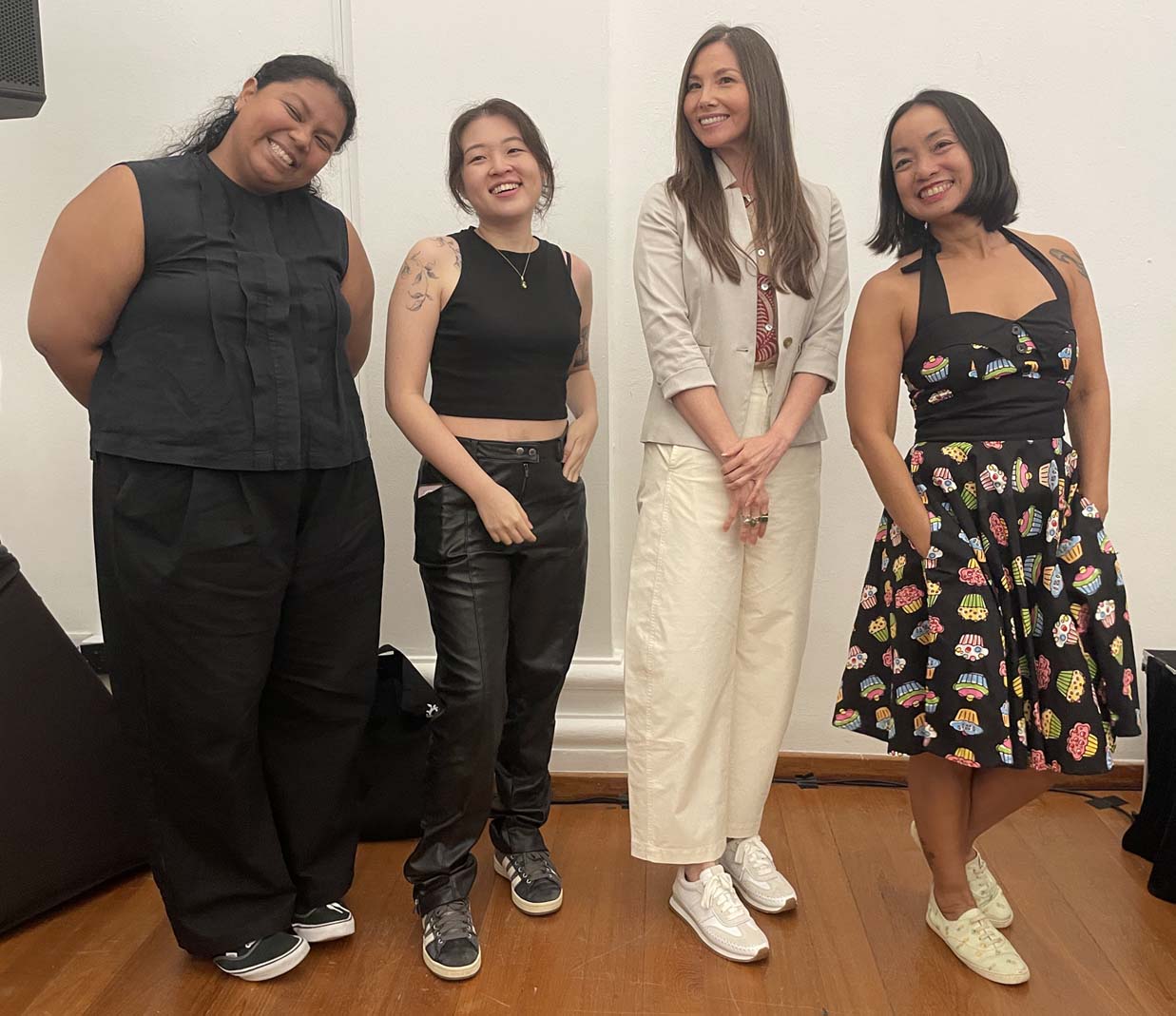
Upstairs at Gallery II, I waited eagerly in line and chatted with fellow compatriots of the dark arts. We were let in, and the moderator, Raffaella Nathan, brought the speakers to the front.
The talk started with some basic questions, including how the authors got into horror, what horror did for them, and how monsters reflect their eras. Liu recounted how being of mixed race made her ‘the other’ growing up, which is also how humans often label monsters and those they do not understand. I listened carefully as the speakers delved deep into the world of monsters.
Humans have always been drawn to horror stories. Even with the terror that an unknown entity poses, the biggest and most frightening monsters have always been humans. The extent to which humans go to hurt others is phenomenal. Horror helps us see hard truths: humans have always stripped away the humanity of others, dehumanising them, feeding fear and greed to justify their brutal assaults on others. It’s easy to do wrong, thus it’s a constant struggle not to become this evil.
For women, horror has often marginalised them and used their bodies against them. The speakers noted that when they were growing up on fantasy stories, they realized how men took the spotlight while women remained in meagre, stereotypical roles. They jokingly called it the Smurfette Syndrome: a bunch of dudes and one chick.
When working on Monstress, Liu was told by men that the comic would only work if the female characters were ‘bad girls’, hint, hint. Liu said no. But then Liu noticed her own prejudices spilling onto the page as she subconsciously made her characters too nice. Once she addressed this and made changes, the comic finally took shape. Our subconscious and indoctrinated ideas on how women need to behave often lead to flat and boring characters.
It’s always scary to fall in love, but falling in love with a monster, ghost or ghoul? Terrifying.
Horror characters find love in different ways. The authors asked, “How do you build romance after the ‘throw yourself at each other phase?’” Some books are romances because it’s a subject that can’t be removed from the dominant story, but what about in horror? All relationships are mirrors of some sort. It’s not just love; it’s evolution. Relationships change us, make us reflect, and evolve. Therefore, romance and horror go hand in hand. Both change the characters, making them see what they never saw. Falling in love and rejection are terrifying experiences. Monsters want to be seen and accepted for their faults, just like in love. Love me for who I am, not for what I am.
When asked where to look for horror stories, the speakers said to look to families. This is where the haunting truly starts. The most terrifying hauntings are when you take something familiar and make it unfamiliar.
Learning to accept the contradictions in people brings a lot of insight. People are not born evil; they just think they are all right. You have heard the saying, ‘Everyone is a hero in their own story?’ The characters regress, spiral, and often reconcile with themselves instead of everyone else. In horror stories, characters often explore their own contradictions; they do not act out of moral obligation, they do what they think is right, even when it’s not. ‘Hell is paved with people not admitting they are wrong.’
As for endings? All three speakers agreed that not everyone has a happy ending; that’s life. These things happen.
After the talk concluded, they opened the floor for questions and answers. Most attendees asked for a deeper explanation of what had already been discussed.
I thoroughly enjoyed the talk and even chatted quickly with Liu before we dispersed. I’ll be honest, I was mostly there for Marjorie Liu because I’m a big fan of her Monstress comic. It was also easier to connect her comments with her work. But I’ve since become a fan of Lee and Boey and will grab their books on my next trip to the bookstore.
Even though the event was one hour long, I felt I gained significant insight into a genre I rarely write about. My advice: attend these events because you never know what you will learn.
Speakers
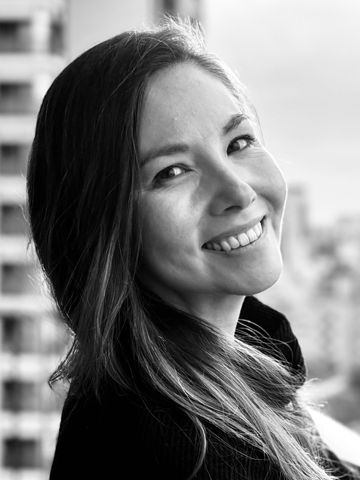
Marjorie Liu is a former attorney turned New York Times bestselling novelist and comic book writer, whose work has earned multiple Hugo, Eisner, and British Fantasy Awards. She has written numerous series for Marvel, including X-23, Black Widow, Han Solo, Dark Wolverine, and Astonishing X-Men, and for BOOM! Studios she contributed a one-shot story to Keanu Reeves’ BRZRKR universe. She is also the co-creator and writer of the award-winning series The Night Eaters, and the author of the Wingbearer fantasy series for children.
Meihan Boey is the Singaporean author of The Formidable Miss Cassidy (Epigram Books Fiction Prize co-winner 2021, Singapore Book Awards Best Literary Work 2022), The Enigmatic Madam Ingram (shortlisted EBFP 2023, for SBA Best Literary Work in 2023, longlisted for Dublin Literary Award) and The Mystical Mister Kay (Epigram Books Fiction Prize Winner 2025). The series is internationally published by Pushkin Press (UK), Harper Perennial (US), Bompiani (Italy) and Ombra (Albania). Meihan’s short stories have appeared in anthologies such as Fish Eats Lion Redux and Best New Singaporean Short Stories Volume 6. She’s still trying to go Super Saiyan.
Wen-yi Lee is the author of When They Burned the Butterfly, a historical fantasy duology about Chinese secret societies and a girl gang in postcolonial Singapore, and The Dark We Know, a young adult gothic horror. Her work often involves troubling women, troubled history, and ghosts, and has appeared in short form in venues like Lightspeed, Uncanny, Strange Horizons, Reactor, and various anthologies. She has been supported by the Clarion West Octavia E Butler Scholarship, the Singapore National Arts Council, and the UK National Centre for Writing. She is currently based in Singapore. Find her online at @wenyilee_ or at wenyileewrites.
Moderator
Raffaella Nathan programmes regional events and book launches as the Community Engagement Executive at indie comics publisher, Difference Engine. She has written for the Asian Film Archive and The Straits Times, and her artworks have been exhibited at Pameran Poskad and Artpaca. She is currently being so cool online @chowyumfart.
A joint initiative by the National Arts Council and Nanyang Technological University, Asia Creative Writing Programme (ACWP) advances the creative practice of literary practitioners through specialised development programmes across Singapore’s four official languages — English, Chinese, Malay, and Tamil.
About Difference Engine
Difference Engine is an independent comics publisher based in Singapore. We are inspired by stories from Asia, and we are committed to publishing diverse, well-written, and beautifully illustrated comics of all genres and for all ages. We collaborate closely with Southeast Asian creators, both new and experienced, with genuine and thought-provoking ideas to share. In addition to our main publishing line, Difference Engine also publishes DE Shorts, an imprint focused on self-contained stories on a wide range of social issues. Our range of print and digital comics and graphic novels are available locally, regionally, and internationally through our network of booksellers, retailers, and distribution partners. To view our full list of titles, visit http://differenceengine.sg
ID used to identify users for 24 hours after last activity
24 hours
_gat
Used to monitor number of Google Analytics server requests when using Google Tag Manager
1 minute
_gac_
Contains information related to marketing campaigns of the user. These are shared with Google AdWords / Google Ads when the Google Ads and Google Analytics accounts are linked together.
90 days
__utma
ID used to identify users and sessions
2 years after last activity
__utmt
Used to monitor number of Google Analytics server requests
10 minutes
__utmb
Used to distinguish new sessions and visits. This cookie is set when the GA.js javascript library is loaded and there is no existing __utmb cookie. The cookie is updated every time data is sent to the Google Analytics server.
30 minutes after last activity
__utmc
Used only with old Urchin versions of Google Analytics and not with GA.js. Was used to distinguish between new sessions and visits at the end of a session.
End of session (browser)
__utmz
Contains information about the traffic source or campaign that directed user to the website. The cookie is set when the GA.js javascript is loaded and updated when data is sent to the Google Anaytics server
6 months after last activity
__utmv
Contains custom information set by the web developer via the _setCustomVar method in Google Analytics. This cookie is updated every time new data is sent to the Google Analytics server.
2 years after last activity
__utmx
Used to determine whether a user is included in an A / B or Multivariate test.
18 months
_ga
ID used to identify users
2 years
_gali
Used by Google Analytics to determine which links on a page are being clicked
30 seconds
_ga_
ID used to identify users
2 years
Marketing cookies are used to follow visitors to websites. The intention is to show ads that are relevant and engaging to the individual user.
Google Maps is a web mapping service providing satellite imagery, real-time navigation, and location-based information.